Showing posts with label Cardiac Arrhythmias. Show all posts

Long QT syndrome diagnosis

How is the diagnosis?
The diagnosis is usually made after a heart attack with fainting, possibly after successful resuscitation after cardiac arrest. In some cases, diagnosed after the sudden death of a family member, and where the assessment of other family members revealed the condition in some patients diagnosed after an ECG taken to at random have demonstrated QT prolongation.

At the physical examination of the patient is the doctor who usually completely normal conditions the ECG with measurement of the QT interval that provides the diagnosis. Diagnosis should be made to the heart specialist. Usually there will also be conducted an ultrasound examination of the heart, echocardiography, to rule out other diseases and to look for any underlying heart disease. However, for the vast majority of the echocardiography show normal conditions.
long qt syndrome diagnostic criteria

It is defined 10 different types of LQTS based on the genetic defects underlying. It is now offered in Norway about genetic testing with proven LQTS. The outcome of the genetic test cannot affect the choice of treatment, and counseling in relation to family members.
>>>READ MORE

Long QT syndrome treatment, symptoms and signs

What is the treatment?
Treatment can be divided into short period and long-term strategies. Short-term strategy is about to stop an acute heart attack, that is to restore normal heart rhythm to prevent sudden death. Long-term strategy aims to prevent future attacks.

Short-term strategy involves immediate treatment of unstable rhythms (torsade de points) - usually with a defibrillator - no matter what the specific cause of QT prolongation may be. It is crucial for the outcome of a cardiac arrest that the next set immediately started cardiopulmonary resuscitation, until you get access to a defibrillator. The acquired long QT syndrome is cessation of the use of the causative drug is often all that is necessary to prevent new attacks.

The cornerstone of long-term strategy is the lifelong use of medication type beta-blockers. This medication stabilizes the heart and can prevent new attacks. In severe cases where the risk of new episodes is assessed to be large, it is necessary to operate a defibrillator and pacemaker.

Athletes advised to quit curry honor. Since heavy physical exertion and severe stress can trigger a heart attack, not advisable to drive competitive sports.
long qt syndrome medications to avoid

What the symptoms and signs provide a long-QT syndrome?
Before a heart attack occurs, he is normally very healthy and without signs of disease. Without warning, a heart attack occurs and manifests itself usually as a fainting or cardiac arrest. Some may also complain of dizziness. A heart attack can be triggered by physical exercise, strong emotional reactions, but it can also come during sleep.
>>>READ MORE

What causes long QT syndrome?

Long QT syndrome is in most cases, a hereditary condition, and it may be familial accumulation of the condition. In some cases, we are combined congenital deafness (Jervell and Lange-Nielsen syndrome). Other forms (e.g. Romano-Ward syndrome) have an accompanying hearing loss.

Long QT syndrome can also occur without the existence of a hereditary disposition (acquired condition). Generally, this is due to the use of drugs that affect heart rate. People who for whatever reason, very slow pulse, may be susceptible to this form of acquired long QT syndrome.
acquired long qt syndrome causes

The danger with a prolonged QT segment is that predispose to seizures with a dangerous heart rhythm ( ventricular tachycardia, torsades de pointes). Such attacks can heal by themselves, but they can also cause cardiac arrest and death.

What is the prognosis?
Long QT syndrome can lead to sudden cardiac death in otherwise healthy young individuals. Overall, it appears that about. 6% of those with this condition have died at 40 years of age.

Experts believe that most episodes of heart attack go by itself and that only 4-5% of attacks leading to cardiac arrest and death.

Treatment with beta-blocker provides decent prognosis for most people. The prognosis after the implanted defibrillator is very good.
>>>READ MORE

What is long QT Syndrome?

Heart disease electrical system. The condition can be manifest itself as unexplained dizziness, fainting or sudden death in otherwise healthy young people.

The heart is controlled by electrical signals. Normally, starting a heartbeat by an electrical signal occurs in what is called the sinus node in the right atrium. The signal travels from the sinus node to another node located at the transition between the right atrium and ventricle (AV node). From there the signal spreads out in both chambers. On his way through the heart triggers the electrical signal contractions in heart muscle. As the distribution of the electrical signal starts the contractions in the upper chambers and ends with the contraction of the heart chambers taken together, this one heartbeat.
qt syndrome emedicine

A heart cardio gram, ECG shows the electrical heart rhythm. Each beat is characterized by a specific set of electrical effects on EKG'et A distinction is made between P, Q, R, S, T and sometimes U-waves These waves have a certain pattern, and they have a relatively fixed distance in time between each other.

Long QT syndrome means that the gap in time between the Q wave and T wave is too long patients with a long QT interval predisposition for arrhythmias in the heart. These rhythm disturbances can be severe, and they lead in some cases of sudden death in children and young people.

The condition is relatively rare but is probably more frequent than previously believed. It is estimated that the long-QT syndrome affects one person per 3000-5000 individuals. The condition usually appears in early childhood or adolescence.
>>>READ MORE

Medical treatment of the rapid heartbeat

Many different mechanisms may be the cause of your rapid heart rate, which also means that there are many ways to restore normal heart rhythm on. If you have low blood pressure, chest pain or a deteriorating heart condition that is considered unstable and should be treated in a hospital, maybe you need an electric shock to restore normal rhythm.

Emergency Treatment
If the doctor finds that your health is stable, he or she can try the following:

Have you tried to hold your breath, or cough, if necessary? Tightening the abdominal muscles (see above)
Provide gentle massage to the neck. This is a measure that should only be performed by health personnel and under controlled condition.

A variety of medications can slow your heart. This collection is usually right in the bloodstream (intravenously)
Subsequent treatment in the acute phase
If the medicine does not have effect, or rapid transition to a normal rhythm is regarded as important, the so-called cardioversion (electrical surge) performed under general anesthesia may be an alternative.

Long-term treatment
If you have frequent and serious attacks, and medical help, you can use such medication to prevent seizures. There are several different medications for this purpose. If it turns out that the medicine does not help, or you have serious side effects of medication, you should be referred to a specialist to evaluate radiofrequency ablation.

Radiofrequency ablation
If the rapid heart rate caused by abnormal electrical rhythm centers or paths in your heart, it may be necessary to "burn off" those points / pathways in the heart. This is done by passing a catheter through the arteries and heart, only to destroy just the small points that cause the irregular heartbeats by burning them with a brief electric shock. This is usually done under local anesthesia.
>>>READ MORE

Quick forkammerrytme what can you do even when an attack occurs?

In most cases, the rapid heart rate harmless, and the attack goes on its own without treatment. Some forms of rapid heart rate may, however, be dangerous, and require rapid and perhaps continued treatment.

Sometimes the attacks seriously and long lasting, and you feel the need to stop the attack. If your doctor has determined that it is a dangerous rhythm disturbance, there are simple measures you can try to stop the attack. Things to try are:


  • Hold your breath for a few seconds
  • Alternatively, dip your face in cold water.
  • Any host
  • Alternatively, tighten your abdominal muscles (as you do on the toilet to push out the stool)

If these measures do not succeed, try to lie down and relax and take a deep breath slowly sometimes. Often this will be enough for the heart slows. If symptoms persist and are bothersome, you should be transported to a hospital. Furthermore, frequent, brief seizures should be evaluated by a doctor.

Simple lifestyle
Some adjustments in daily life can also make sense in terms of achieving control of the situation:


  • Learn to count your pulse beats, and to check whether the pulse is smooth. Normally, the pulse beats regularly and by 50-100 beats per minute.
  • Exercise regularly. Being in good physical condition makes your heart stronger and provides, among other things, that you get a lower blood pressure and slower heart rate.
  • Learn to cope without techniques to reduce stress levels. Techniques such as meditation and biofeedback can be beneficial, but to learn to relax muscles and deep breathing is often enough.
  • If you suffer from other diseases or conditions, you should try to achieve the best possible control of these by following your doctor's advice.
  • Stump the smoke!
  • Cut down on caffeine intake (drink less coffee)
  • Avoid drugs and illegal drug, most of which stimulates your heart.
  • If you are overweight, you should strive to lose weight. Obesity pushes your heart to work harder.
  • Try to keep a healthy diet low in fat, cholesterol and salt
  • Reduce alcohol consumption, if this is too high. Taking more than two glasses of wine or equivalent should only happen in exceptional cases.
  • Ask your doctor to make sure none of your medications affect your heart rate, including non prescription medicines and herbal.
>>>READ MORE

What quick forkammerrytme investigations are appropriate?

By serious and frequent complaints should be investigated so as to determine the rhythm disturbance in question. A number of investigations may be appropriate.

ECG
This is a painless and quick survey to map the electrical activity of your heart. This is done by electrodes attached to your skin on the chest, arms and legs. The study shows if you have an ongoing rhythm disturbance, and in some cases also demonstrate the underlying cause of this disorder. This study can be done at the GP, and it can often be the only investigation required.

24-hour ECG
In many cases, the abnormal heart rhythm which comes and goes, and in such cases, it may be difficult to get an ECG taken during the seizure, particularly if the attack is of short duration. It may be useful to register the attack with ECG and to increase the chance of "catching up" attack; one can put on your ECG equipment that you wear for 24 hours. This is also called Holter monitoring, and means that you are connected to an ECG machine that records your heart rate while doing your normal activities. You will as well be asked to perform "diary" while the appliance is plugged in, so you can see if there is consistency between your subjective symptoms and any ECG changes, and whether there are specific activities that trigger the episodes.

A stress ECG
This is done by first taking an ECG at rest, then an ECG taken while the heart is charged in that you walk on a treadmill or cycling on a stationary bicycle. If you are unable to charge the heart through physical activity, may be given a medicine that short-term strain the heart if there is suspicion of underlying coronary artery disease (angina pectoris), this study important.

Echocardiography
This is an ultrasound of the heart. It is performed by passing a small hand-held transmitter / receiver of the ultrasound of your chest, and one has obtained pictures of your heart on a screen. Your doctor may be using the images judge how well your heart pumps, if there are areas of the heart muscle that do not operate properly, and the valves of the heart are working properly. In some cases, this examination may be required to do via the esophagus ( transesophageal echocardiography ) to get a more accurate picture.

Cardiac catheterization and coronary angiography
Such studies are necessary if you experience symptoms such as chest pain, breathlessness, loss of consciousness and suspected heart disease. This is research that is done under local anesthesia, and give the doctor an opportunity to evaluate the arteries of the heart and blood flow through the heart.

Electrophysiological tests
If you find signs of failure of the heart's electrical conduction system, may be required to make thorough investigations of the conduction system. This is a survey done by several small sensors placed in your heart chambers via a catheter (read more about this during cardiac catheterization ), which records the electrical activity of your heart. The survey is done under local anesthesia often performed radiofrequency ablation at the same time (more on that later).
>>>READ MORE

What are the symptoms of the upper chambers beats too fast?

All we can be affected by irregular and rapid heartbeat, and a number of factors are contributing to the symptoms you experience. Young and otherwise healthy people who experience these seizures with rapid pulse, makes little of it, except that they notice palpitations. Do you have an underlying heart disease, a rhythm disturbance in the anterior chamber to be a strain on your heart and require treatment?

In a larger study of many patients with attacks of supraventricular tachycardia was found following the occurrence of symptoms: palpitations (96%), dizziness (75%), shortness of breath (47%), chest pain (35%), fatigue (23%), floppiness (20%), sweating (17%), nausea (13%). Some may notice an increased urge to urinate after a seizure. Many are naturally enough, worried and anxious under such attacks.

In sum, this change in heart rate which occurs suddenly, and disappears by itself within a few minutes. Others can go with complaints from the busy heart for several days.
>>>READ MORE

What can cause rapid forkammerrytme to be?

A number of conditions related to abnormal heartbeat, but the following is among the most common reasons:


  • Atherosclerosis (atherosclerosis)
  • Heart Failure
  • Damage to the electrical wiring of the heart, for example after myocardial infarction
  • Thyroid disease ( hyperthyroidism )
  • COPD or other chronic lung disease
  • Pneumonia, a blood clot in the lung and other sudden changes in local lung
  • Inflammation of the pericardium ( pericarditis )
  • Certain medications, drugs or other beverages such as alcohol
  • A stressful lifestyle or stress episodes


When to see a doctor?

Fast forkammerrytmer is rarely life threatening; the exception is if you have another serious heart disease. You should contact your healthcare provider if this is the first time you experience the phenomenon, and the symptoms last longer than a minute or two. If you've had down resembled episodes in the past but this time the seizure lasts far longer than before, you should also seek help.

If you experience rapid heartbeat characters in combination with dizziness and / or fainting tendency, chest pain or breathlessness, you should see your doctor as soon as possible. Do not attempt to drive to the hospital on their own, but rather call 113, so they can help you.
>>>READ MORE

What triggers a question forkammerrytme?

The electric signals that control the contractions of the heart, occurs normally in a center in the heart's right atrium, called "SA node." Occasionally, other areas in the anterior chamber trigger electrical signals and "outperform" SA node for a period. This can only occur when these signals are faster than the signals from the SA node. The result is that the upper chambers and the heart beats faster - there are attacks of supraventricular tachycardia.

Often we do not know what triggers attacks with quick forkammerrytme. Usually, there are enough changes in the heart, but heart rate can also be affected by nerve signals to the heart and hormones in the blood.

Most people who suffer from an abnormal heart rhythm, live normal lives without any restrictions. However, some may also have underlying heart disease as the cause of the phenomenon. Seizures with rapid forkammerrytme can affect everyone from healthy children and adolescents to the elderly with heart disease.
>>>READ MORE

What causes cardiac arrhythmia?

The heart is divided into four chambers with two chambers on the right and two chambers on the left side. On each side, there are a chamber (atrium) and ventricle (ventricle) that work together to pump blood out into circulation. Chambers on the right-side pump's blood into the pulmonary circulation, and the chambers on the left-side pump's blood out into the wide circulation.

In connection with a single heartbeat does the two chambers on the same page as two pumps. First pull the smaller upper chambers together and fill the relaxed ventricles with blood. Immediately, after drawing the powerful chambers of the heart contracts and squeezes blood in cycles while the flaps are closed and the chambers fill with blood again. Effective circulation requires a rhythmic coordination of the upper chambers and the chambers of the heart to get the best possible pump effect.

In addition, it requires good control of the pulse, i.e., heartbeat rate, which is normally 60-100 beats per minute when the body is at rest. The coordination of these two mechanisms is performed through the heart's electrical system.
>>>READ MORE

Damage to the electrical system of the heart

In a healthy person with a normal, in condition heart, it is unlikely that a sustained rhythm disturbance can occur without any external factor affecting. It may be an electric shock or use of any illegal drug. This is primarily because the heart is free from abnormal items, such as. Scar tissue. Scars in the heart may occur as a result of a wide range of conditions, but most commonly it is after a heart attack. Scar may interfere with initiation of an impulse in the sinus node or the spread of the impulse conduction system. In addition, the cardiac cells' inability to conduct electric impulses in the refractory period, helping to prevent accidental electrical impulses occurred elsewhere than in the sinus node, progresses to an arrhythmia. If, however, a heart disease or damage, initiation and propagation of the heart's electrical impulses become destabilized, which increases the risk of arrhythmias may occur.
electrical system heart disorders

Relaxation and electric charge
Each cell in the heart that contribute to the prevalence of the heart's electrical impulses, has two electric states: a charged (polarized) state and a relaxed (flat, refractory state) condition. In the polarized state, the heart cells are prepared and able to conduct the electrical impulse that will cause a heartbeat. After a heartbeat's cells in a flat phase, before they can be charged to a polarized state and is ready for a new heart. In the drained phase is the heart cells are unable to conduct an impulse.
>>>READ MORE

The heart's electrical system

Sinus node - the starting of the electrical impulse
Each heartbeat normally occurs in a specialized group of cells called the sinus node. It is located in the upper-right atrium and the heart's natural pacemaker, ie; it is the one that gives the starting signal for each new heartbeat. Sinus node can cause electrical shock or impulse, which is the start of a heartbeat. This is what the heart and other cells, but the sinus node determines the speed of his works, and the heart; they are usually inactive. To describe the standard heart rhythm to normal sinus rhythm doctors.

Wiring harness and the spread of the electrical impulse
From the sinus, node spreads electrical impulses through the heart. When an impulse pass, draws the heart-muscle fibers contract. In a normal heartbeat, impulse spreads first to the right, then in the left atrium after activating atriyadalli down, the tension on the heart and center of the AV node (atrio-ventricular node) that continues. AV node is normally just a hub in the electrical system between the atria and ventricles.
heart electrical conduction

The impulse is delayed approx. tenths of a second in the AV node to the atria time to fill the ventricles with blood. From the AV node, the impulse spreads along two electrical conduction paths (right and left wire bundle), extending beyond the impulse in the right and left ventricle.
>>>READ MORE

What is the heart's electrical system?

Heart Inside
The heart is divided into four chambers with two chambers on the right and two chambers on the left side. On each side, there are a chamber (atrium) and ventricle (ventricle) that work together to pump blood out into circulation. Chambers on the right-side pump's blood into the pulmonary circulation and the chambers on the left-side pump's blood out into the wide circulation via the aorta (the aorta).

In connection with a single heartbeat does the two chambers on the same page as two pumps. First pull the smaller atria contract and fill the relaxed ventricles with blood. Immediately, after drawing the powerful ventricles contract and push blood out of the cycles while the flaps are closed to the atria, and they fill with blood again. Effective circulation requires a rhythmic coordination of the atria and ventricles to maximize water output.
heart electrical system ekg

In addition, it requires good control of the pulse, i.e., heartbeat rate, which is normally 60-100 beats per minute when the body is at rest. The coordination of these two mechanisms is performed through the heart's electrical system. This system acts as a three-stage system.
>>>READ MORE

How can I live with an implanted defibrillator?

Most likely you can resume a normal life after the procedure. You can be physically active, working, having sex. The first four weeks after surgery, however, you should avoid heavy physical activity, heavy lifting, participation in contact sports.

Problems with the AED as a result of interference with other electrical items, is rare.

  • It is recommended however that you avoid placing an enabled mobile phone closer than approx. 15 cms from the AED. It is advantageous to hold the phone to the opposite ear, and not have it in your jacket / belt at the side of the AED is located. Remember that it is just as active when you do not speak it.
  • In airport security, the AED will trigger the alarm. You should therefore be provided with proof that you have a defibrillator.
  • Hand-held metal detectors may interfere with the AED. Such scans should be run for less than 30 seconds in the area above the starter.
  • MRI may influence the AED, and the physician must consider carefully whether an MRI is feasible.
  • Hold at least a distance of 0.5 m from the power generators.


Microwave ovens, TVs, remote controls, radios, MP3 players, electric blankets, electric shavers and electric drills involve little or no risk.
>>>READ MORE

Is the Implantable defibrillator to benefit?

Defibrillator has become standard therapy in all who have survived a cardiac arrest, and it is also used increasingly in patients who are at high risk of sudden cardiac death. Research shows that if you have an implanted defibrillator, it reduces the risk of cardiac arrest clearly compared with drug therapy.

An implanted defibrillator must-have for the rest of your life. Although the electric shocks are unpleasant, they are proof that the AED is working, and that it protects you from sudden death.


What about driving?
Driving is not permitted defibrillator. The combination of cardiac arrhythmias and shock can lead to fainting, which is dangerous when driving. The hospital is required to notify the county medical officer, who will ask you to submit the certificate. If you do not have any episodes during the course within one year, you can apply for an exemption from the rule and get the certificate back.
>>>READ MORE

What do you do if you get a shock?

Society of Cardiology recommends the following:


  • Take it slow and find a place to sit or lie.
  • In the unlikely event not wake up immediately after treatment, some of the environment called for an ambulance.
  • If you are awake, but feeling uvell after the impact, then call the control center (daytime) or your doctor. It may be appropriate to call an ambulance.
  • If you feel handsome after the treatment (which is the most common), and it does not happen any more, there is no need to contact someone immediately. However, you should as soon as practicable (next day) call control center and talk about the episode.


The unit must be checked.
The unit should be checked regularly at the control center you belong to. Your doctor will check the condition of the battery and test leads into the heart. The unit remembers all the episodes where it has been given shock, ECG records from the incident, so the doctor can write out the details of the cardiac rhythm. The events can be analyzed, and the programming is adjusted so that the AED can best serve. It is especially important to adjust the AED if it has an unnecessary shock.

The unit controls will "speak out" in advance of when the battery starts to wear out and need replacing. Some types will notify the whistling. The generator replacement is usually only necessary with a short hospital stay. An intervention by a couple of hours' duration is normal for the change typically, only the generator shift, while the cord to the heart retained. The procedure ends with a test in which general anesthesia at the first admission.
>>>READ MORE

The operation itself Implantable defibrillator

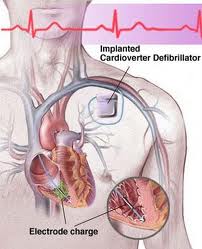
Implantation of the AED is in local anesthesia. The procedure usually takes 1 to three hours. During the procedure carried a lead into one of the larger veins in or near the collarbone, and managed to use the X-ray fluoroscopy until the heart. The ends of the cord (s) entered at the bottom of the heart of the heart chambers (ventricles). The other end to the cable attaches to the shock generator, which is usually implanted beneath the skin just below the collarbone.

After implantation, the heart doctor to test the AED and program it to handle your specific heart problem. Testing of the AED means that you have to shock your heart. You will be anesthetized when it happens. Generally located 1 to two days in the hospital after the procedure, and it is common to check the AED one or more times during their stay.

After the procedure, it may be a little sore in the operational area, which may be swollen and sore from a few days for several weeks. Painkillers will ease the pain. You cannot even drive home from the hospital after discharge.
>>>READ MORE

Who needs an implantable defibrillator?

You are a candidate for an implantable defibrillator if you have had an attack of ventricular tachycardia, have survived an episode of sudden cardiac arrest or have fainted as a result of the abnormal heartbeat in the ventricles (lower chambers). Other reasons maybe you have had a heart attack that has weakened the heart; that heart muscle is diseased ( cardiomyopathy ) or you have an inherited defect in the heart's electrical conduction system, such as a so-called long QT syndrome - which can lead to ventricular fibrillation and death even in young, active people. Other rare indications may be the Brugada syndrome and arrhythmogenic right ventricular dysplasia.

Is implantation associated with some risk?
Implantation is rarely associated with complications. The most common problem that can occur is infection where the AED operated in, bleeding and blood clots, damage to the vein where the wires go to the AED, bleeding from the heart, heart valve leakage through the wires goes through. Research shows that the overall complication rate is approx. 1.5%.

How do you determine whether you need Mon defibrillator?
Several investigations are part of such a cardiac evaluation. A heart (ECG) is one of the standard surveys. EKG'et can provide evidence about the type of rhythm disturbance you have. Echocardiography is an ultrasound scan that gives information about how well the heart works, such as whether it is significantly weakened.
who needs implantable cardioverter-defibrillator

Electrophysiological measurements used to determine whether there are defects in the heart's electrical system. Holter monitoring means that you go with an ECG recorder for you in 24 hours. In the event of arrhythmia within this period, they will be caught up, and the doctors can find out what type of rhythm disturbance that is.

It is difficult to identify who will benefit from a defibrillator. Unfortunately, such that in the majority of cardiac arrests occur without warning and cause sudden cardiac death.
>>>READ MORE

How does the Implantable defibrillator?

When the heart rhythm suddenly changes, rapid and possibly intermittent, the electrical signals through wires from the heart to the AED. It sees it as an emergency and sends electrical impulses back to the heart. Depending on what is wrong with the heart rhythm, the AED can be programmed for different treatments:

Low energy pacing. In such a situation, select either nothing or only a slight tremor in the chest when the AED sends weak pulses to the heart to correct minor disturbances in the heartbeat.

Cardioversion. A powerful electric shock is emitted to cope with a serious heart problem. It feels like you are getting a blow in the chest.

Defibrillation. This is the most powerful electric shock that can be made ​​to restore normal heart rhythm. It felt painful and as though you have gotten a kick in the chest. Typically, this pain lasts only a second time, and it is rare discomfort after the shock is over.

Usually, there is enough of an electric shock to restore normal heart rhythm. Sometimes you may need two or more such shocks over a 24-hour period. Frequent shock over a short period of time is worrying, and you should subsequently immediately seek medical attention. One must then determine why it is so, if there is an error with the AED, or if there is another underlying medical explanation. Alternatively, if you need another form of treatment.
>>>READ MORE